中文
中文 English

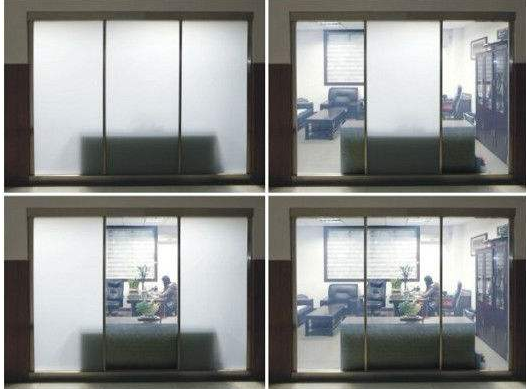
Dimmable glass is a kind of adjustable glass material frequently used in home bathroom decoration or office Spaces nowadays. It can effectively control the clear state presented by the glass through electricity, temperature and light, better protecting privacy. Well-designed dimmable glass is not only used as glass but also as a partition wall or decorative painting. It is evident that its practicality is more advantageous than that of traditional ordinary glass. So, when users want to purchase dimmable glass, how can they judge the quality? Let's take a look at the following account provided by our editor
First: Check the light transmittance of the dimmable glass
When choosing dimmable glass, first observe the light transmittance effect presented by the glass when it is powered on. Only when it can transmit light without being transparent and has a beautiful appearance can privacy be well protected. In addition to visual inspection, users can also test it by hand. When the power is off, place your palm on the back of the dimmable glass and look at it. You can see a blurry hand image but the fingerprints on the palm are not clear. This indicates that the light transmittance of the dimmable glass is good.
Second: Check the dimmable glass laminated film
Laminated film is also a quality criterion when purchasing dimmable glass. There are many types of laminated materials. Specific users can ask the merchant for the certificate of the laminated film in the middle when purchasing to have a clearer understanding of the quality of the laminated film they have purchased. The dimmable glass interlayer film can enhance the impact resistance of the glass and effectively cope with long-term use in various high-temperature and high-humidity environments.
Third: Look at the dimmable glass panel
The panel is a very important material for selection. Only when the panel is of good quality can the various pictures and functions presented be performed well. When choosing a panel, one should consider its thickness and fire resistance. Moreover, the material should be selected based on different usage environments. For instance, some panels are tempered glass, some are highly fire-resistant glass, and some require curved glass, etc.
It can be seen that to choose good dimmable glass, it is necessary to evaluate and judge from multiple parameters. Besides the three selection conditions introduced by the editor, it is also necessary to measure from the size of the glass and the fixation of the material. Only when the material size is cut in a standardized manner can it be more conducive to the user's later construction and installation. In addition, it is recommended that users, in addition to paying attention to the function, choose dimmable glass that is easy to use Only in this way can the convenience in practical use be enhanced.